Google Business Profile for Restaurants: Photo Guide
The part of a Google Business Profile for restaurants that decides whether someone walks in is the photographs. Hours, phone number and menu link are table stakes. Every competing profile has them. The photos are the only part a hungry person actually reads, and they are the part most owners leave to whoever happens to be holding a phone.
This is a photo workflow, not a setup checklist. It assumes your profile exists and is verified, and it deals with the part that keeps costing you covers.
Your photos are the menu people read first
A profile photo set does a job a menu cannot. It answers "what does this place feel like on a Thursday night", "is this the sort of room I can bring my parents to", and "does the food look like the description", in about four seconds, before anyone reads a word.
Google is specific about the files it will take. Photos must be JPG or PNG, between 10 KB and 5 MB, at least 250 pixels square, with 720 by 720 recommended. It also asks that a photo "should be in focus and well lit, and have no significant alterations or excessive use of filters". The full list is on Google's photo requirements page.
That last clause is the one restaurants trip over. A heavily filtered plate that does not match what arrives at the table is a refund and a two-star review, and Google asks for the image to represent reality for exactly that reason.
If you are unsure whether a photo clears those limits, you can check its size and dimensions before you upload rather than after it is rejected.
Google Business Profile for restaurants: the photo set to shoot
Google publishes the categories it wants and the minimum number for each. This is not guesswork or agency opinion. It is Google's own business-specific photo guidance, and most restaurant profiles are missing at least two of these entirely.
| Category | Google's minimum | What it settles for the customer |
|---|---|---|
| Exterior | At least three | Whether they can find you from the street, and what the frontage looks like after dark. |
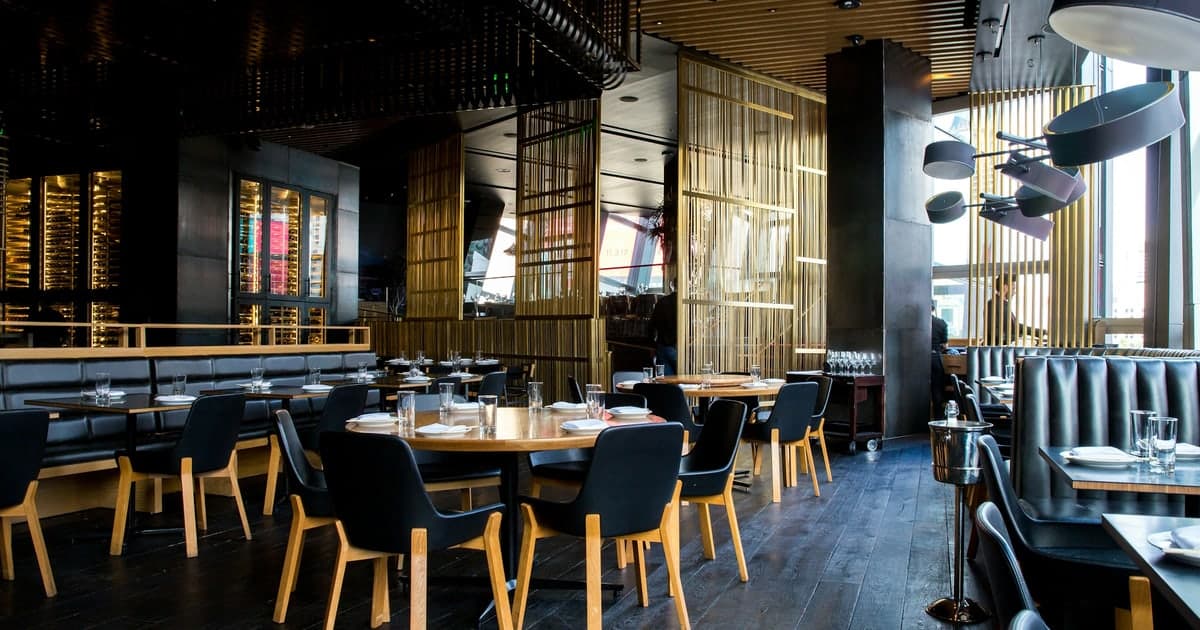
| Interior | At least three | Lighting, seating and noise level: the "can I bring a client here" question. |
| Food and drink | At least three | Portion size and plating. This is the one that converts. |
| Team | At least three | That there are people behind the place, which matters for a neighbourhood restaurant. |
| Common areas | At least one of each | Bar, terrace, private room: anything a booking might hinge on. |
Shoot the missing categories before you touch anything else on your profile. An afternoon with a clean window and daylight beats any amount of fiddling with file names.
Dish photos, and who gets to name them
Restaurants have one feature other businesses do not, and almost nobody uses it deliberately. On a restaurant profile, dishes get names attached to photos, and those names can come from either side.
Google states it plainly: "Both you and your customers can add photos and names of dishes." The sentence that follows is the one worth acting on: "dish names added by you will get precedence over dish names added by customers", from Google's page on managing your restaurant's popular dish names.
Customer photos are arriving whether you participate or not. If you have never uploaded and named your own signature dishes, the version of your menu on display is whatever a stranger photographed in bad light and labelled from memory.
Shoot your six best-selling dishes properly, upload them, and name them the way they appear on your menu. That is an hour of work that decides how your food is described to everyone who looks you up.
What the file remembers, and why a group with three sites cares
Every photo carries information beyond the picture: when it was taken, what took it, and, if location was switched on, where. For a single restaurant that is a curiosity. For anyone running more than one room it is administration.
A group with three sites accumulates a shared folder of food photos within a year, and by the second year nobody can reliably say which kitchen a given plate came from. When the wrong site's interior ends up on the wrong profile, the fix is guesswork. A location written into the file at the time removes the guessing permanently.
There is also a field set worth filling in for a different reason. Asked how important EXIF data is, Gary Illyes of Google Search said in a published Search Office Hours session: "Google doesn't use EXIF data for anything at the moment. The only image data, or metadata, that we currently use is IPTC." The IPTC half is the caption, creator, credit and copyright: the part that records who shot the picture.
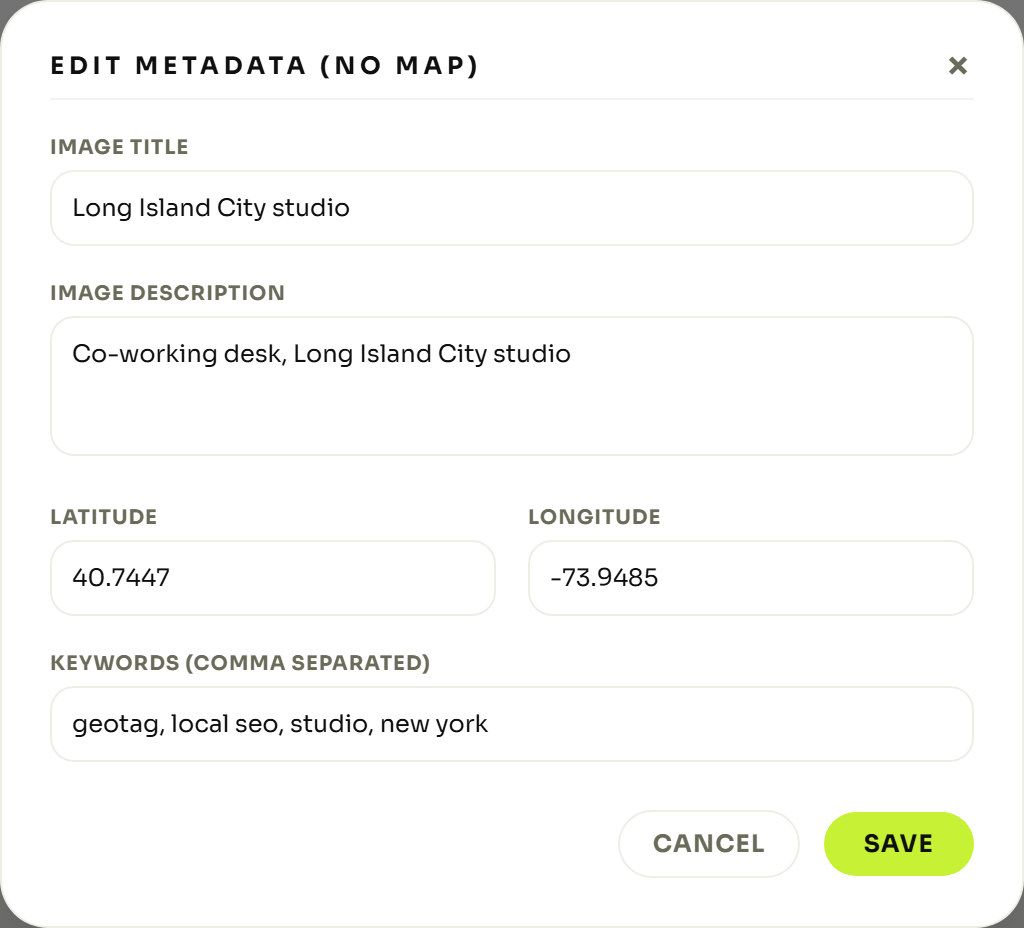
If you pay a photographer, that matters twice over: it is the only metadata Google has said on the record that it reads, and it is the record of who owns the image when it turns up on an aggregator. When a photo is going into your permanent library, set the location and credit on the file before it is filed.
Does geotagging your food photos help you rank?
No, and you will be told otherwise. The claim is that coordinates inside a photo tell Google where you operate and lift your position in the map results.
It has been tested three times. Two tests found nothing. The largest ran 27 businesses over ten weeks, with five control weeks where the location was stripped out, and found that one measure of seven improved and four got worse. The agency that ran it stopped doing it for clients.
Geotag your food photos so you know which kitchen they came from. Do not geotag them expecting covers. The full picture is in what the evidence says about ranking photos, and the mechanics are in how coordinates get written into a photo.
A photo routine that survives a busy week
Most restaurant photo libraries decay because there is no routine, not because anyone disagrees about their importance. This one fits into a service.
- Audit once against Google's categories; list what is missing.
- Shoot the gaps in daylight, in one session.
- Photograph every new menu item the week it launches.
- Name your own dish photos before a customer names them for you.
- Set location and credit on anything entering the permanent library.
- Every quarter, delete what no longer looks like your restaurant.
The last one matters more than it sounds. A profile carrying a photo of a room you refitted two years ago is setting an expectation you will fail to meet, and you can check when a photo was actually taken if you are not sure how old it is.